
Your parents or grandparents used to keep each and every important paper, from bank passbooks and LIC policies to property documents, locked inside that one steel almirah, and only one person in the house really knew which file was kept where? That system was working fine until the day that one person was not around anymore, and the rest of the family was left running between banks, insurance offices and courts for months, just trying to figure out what was even there.
Today, working professionals are earning more, investing in more places and holding more accounts than their parents ever did, but most of them are still not having any plan for what happens to all of it after them. But what really is the need for a proper estate planning India approach when you are still young and busy building your career? Estate planning is simply making sure that everything you have worked hard for is reaching the right people, at the right time and without any hassle, so let’s break it down.
What Is Estate Planning?
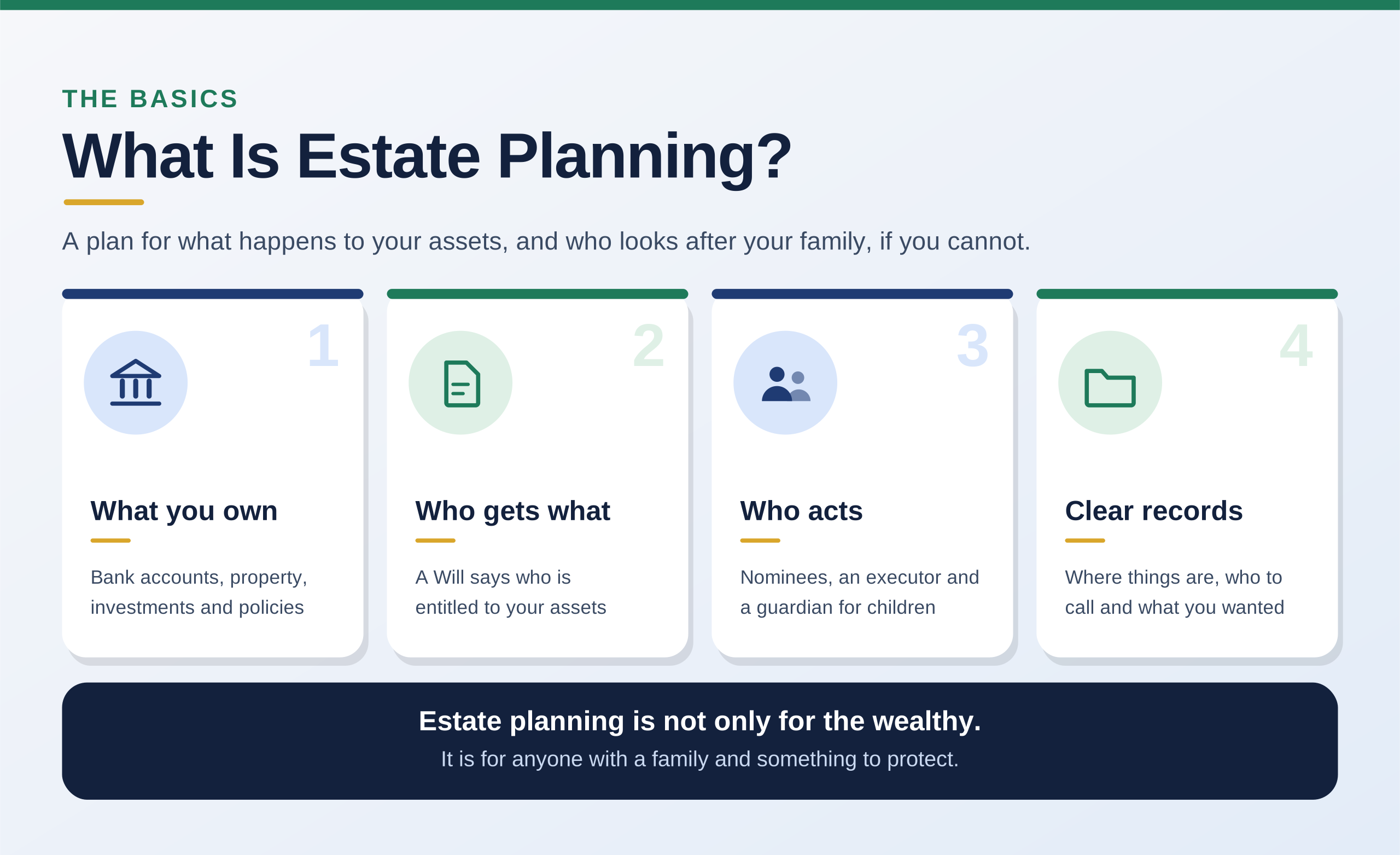
Estate planning is the process of organising your assets, documents and final wishes in a way that your family/nominees can access and transfer them smoothly after your death, or even when you are not in a position to manage things yourself due to a medical emergency. When a person is passing away without a valid will, the estate planning India rules are falling back on succession laws like the Indian Succession Act, 1925 and the Hindu Succession Act, 1956, which are then deciding who is getting what.
This is not always matching what you would have wanted for your spouse, children or parents, and the reasons why so many families are facing trouble are not hard to see.
The Challenges Families Face Without an Estate Plan
For many years, Indian families have been relying on memory, a few files and maybe one old diary to keep track of their finances, and this is resulting in:
- Accounts and policies that nobody in the family even knows exist.
- Months of running between banks, insurers and courts for legal heir certificates.
- Disputes between family members over property, savings and investments.
- Money ending up unclaimed with banks, insurers and regulators.
Nearly ₹2.2 lakh crore is already sitting as unclaimed money in India, and a big part of it is belonging to families who simply did not know the asset was there. Problems like these don’t just delay the money reaching your family, they also add a lot of stress at a time when they are already dealing with grief, and this is exactly why a proper estate planning India approach is becoming extremely crucial for working professionals.
Why Working Professionals Really Need Estate Planning
Most salaried individuals are thinking that estate planning is only meant for the rich or for people who have retired, but waiting that long is not suitable nor suggested for anyone who is earning, investing or supporting a family. A typical working professional today is holding a salary account, EPF, a few mutual funds, a demat account, term insurance, a home loan and dozens of digital accounts, and the family is usually knowing about only half of these.
This is where estate planning India is stepping in, helping you put each and every asset, liability and wish on record while you are still the one in control of it. But what does a complete plan actually include, and where should you begin? Well, let’s take a look.
The Key Components of an Estate Planning India Strategy
A complete estate planning India setup is not limited to one single document, it is a combination of legal, financial and personal pieces that are working together, and these are the ones you should be knowing about.

A Valid Will
A will is really the foundation of any plan, as it is clearly stating who is receiving which asset, and it just needs to be signed by you in front of at least two witnesses to be valid. Registering it with the sub-registrar is optional, but it is definitely making the will much harder to challenge later, and our guide on how to make an online will in India is walking you through the full process.
Correct Nominations
Nominees are being added to bank accounts, mutual funds, demat accounts, EPF and insurance policies, but many people are not aware that a nominee is generally acting as a custodian/trustee of the asset, and not always its final owner. If your will is naming someone else, the legal heir can still claim the asset from the nominee, which is why understanding the difference between a nominee vs legal heir is extremely crucial before filling any form.
Insurance Cover
A term plan is protecting your family against the loss of your income, while a health cover is making sure one hospitalisation is not wiping out years of savings, and both of these are forming a big part of your estate plan. A policy that your family is not knowing about is a policy that is never getting claimed, so the policy numbers, insurer details and nominees should be recorded properly.
Documents and Digital Assets
Property papers, investment statements, locker details and passwords for email, cloud storage and trading apps are all a part of your estate, and they need to be kept somewhere your family can reach when the time comes. You can go through our list of 12 emergency documents every Indian household needs and our guide on digital assets after death in India to make sure nothing is being left out.
Many people are also getting confused between a will, a nomination and a trust, so let’s take a look at how they are different.
Will vs Nomination vs Trust
Here is a simple comparison that is making the estate planning India basics much easier to understand for beginners and first-time planners:
| Feature | Will | Nomination | Trust |
| Purpose | Distributes All Assets | Transfers One Account | Manages Assets for Beneficiaries |
| Ownership | Goes to Beneficiaries | Nominee Holds as Custodian | Trustee Manages on Their Behalf |
| Cost | Low | Free | High |
| Best For | Every Working Professional | Banks, Insurance and Investments | Large or Complex Estates |
| Can Be Changed | Anytime | Anytime | Depends on Trust Type |
For most working professionals, a properly witnessed will along with updated nominations is covering almost everything, while a trust is generally making sense only for larger or more complex estates.
A Simple Estate Planning India Checklist for Beginners
Starting from scratch is not as complicated as it is sounding, and if you are following these steps in order, you will be having a clear plan that your family can follow without any confusion:
- List each and every asset, from bank accounts and investments to property, gold and digital accounts.
- Note down all loans, credit card dues and other liabilities your family should know about.
- Check and update nominees across banks, mutual funds, demat, EPF, PPF and insurance.
- Draft a will, sign it in front of two witnesses and consider registering it.
- Appoint an executor you trust to carry out the instructions in your will.
- Store all documents and details in one secure place your nominees can access.
- Review the plan every year, and after marriage, childbirth, a job change or a property purchase.
This is turning estate planning India from a one-time task into a regular habit, and it is making sure your family is never left guessing about what you owned or what you wanted.
Common Mistakes Working Professionals Are Making
Even professionals who are extremely disciplined with money are making a few common mistakes in their estate planning India approach, such as:
- Thinking they are too young to need a will.
- Keeping nominees unchanged for years, even after marriage or children.
- Not telling anyone which accounts, policies and lockers exist.
- Leaving email, crypto and trading accounts completely out of the plan.
These mistakes are not needing a big budget to fix, they are just needing a little awareness and the right place to keep everything organised.
How EternaSafe Is Making Estate Planning India Hassle-Free
A will is taking care of the legal transfer of your assets, but it is not telling your family your passwords, your locker location, your policy numbers or whom they should be calling first, and this is exactly where most families are getting stuck. EternaSafe is a zero-knowledge digital account built for Indian families, where you can store your asset details, legacy notes, helpful contacts and final wishes, which are released only to up to three verified nominees when it really matters.
And that is not all, your data is being encrypted with AES-256 on your own device and stored on Indian servers, so it is designed in a way that even the EternaSafe team cannot read it, making it a safe companion to your estate planning India documents. If you are still deciding where to keep your papers, our comparison of physical vs digital vaults is explaining both options in detail.
Final Thoughts
Estate planning is not about expecting the worst, it is about making sure the people you love are not running from one office to another with paperwork, passwords and legal processes at a time when they are already dealing with a loss. Starting early with a will, updated nominations and one secure place for all your information is giving your family clarity from beginning until completion, and a thoughtful estate planning India approach is definitely one of the best financial decisions you can make for them.
So if you have not started yet, today is really the right time to list your assets, update your nominees and set up your EternaSafe account, because your family deserves to know everything when it matters the most.
FAQs
What is estate planning in India?
Estate planning in India is the process of organising your assets, will and nominations so they are reaching your loved ones without any hassle.
Do I need a will if I already have nominees?
Yes, because a nominee is generally acting as a custodian of the asset, while your will is deciding who finally owns it.
Is it compulsory to register a will in India?
No, registration is optional, but a registered will is definitely much harder to challenge and is carrying stronger legal weight.
At what age should I start estate planning?
You should be starting as soon as you are earning, investing or having family members financially depending on you.
How much does estate planning India cost for salaried professionals?
Basic estate planning India costs are really low, as a simple will and nomination updates need minimal fees, while trusts cost more.
How often should I update my estate plan?
You should be reviewing it every year and after major life events like marriage, childbirth, a job change or buying property.
Can digital assets be included in estate planning?
Yes, email, cloud storage, crypto and trading accounts can be mentioned in your will and stored securely for your nominees.