Most families do not think about what would happen if the person managing their finances suddenly became unavailable. It is not because they do not care about their family, but because everyday life keeps them busy with work, bills, household responsibilities and plans for the future. There is always another weekend to organise the documents, another month to update the will and another opportunity to explain where the important financial records are kept.
But what happens when that opportunity never comes?
Imagine a family where one person manages the bank accounts, knows which insurance policies are active, remembers where the property papers are stored and handles most of the household’s financial decisions. Their spouse knows the basics, but the complete picture exists only in that person’s head. If they suddenly pass away or become unable to manage these responsibilities, the family may have to search through old emails, cupboards, phone records and financial statements just to understand what they own and which payments need attention.
The problem is not necessarily that the family has no money or insurance. The problem is that they do not have the information needed to manage what is already theirs.
This is where the comparison between EternaSafe vs doing nothing becomes important. A digital legacy platform India families can use for organising financial records, important documents and instructions can help reduce the confusion that follows an unexpected event. Doing nothing, on the other hand, leaves the family to figure everything out when they may already be dealing with grief, urgent expenses and unfamiliar responsibilities.
But what does being unprepared actually cost a family? Well, the cost goes beyond money, and understanding these consequences can help you decide what needs to be organised before it becomes an emergency.
What Does Doing Nothing Actually Cost a Family?
When people think about financial planning, they usually focus on how much money they save, which insurance policy they buy or how they will build wealth over time. These are important decisions, but there is another question worth asking: if something happens to you, will your family know how to find and manage the financial resources you have already built?
Without a clear record, even a financially stable family can face avoidable difficulties.
1. Money That the Family May Never Find
A person may have several bank accounts, fixed deposits, insurance policies, mutual funds and investments accumulated over many years. If the family does not know where these assets are held, some may remain undiscovered or unclaimed for a long time.
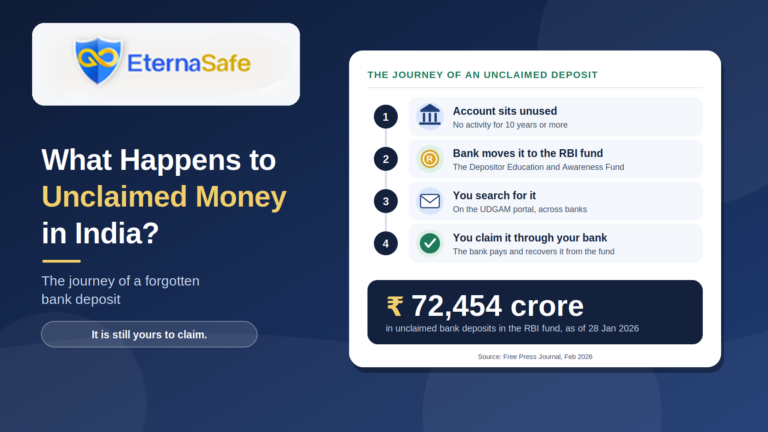
This is not a small concern in India. Government disclosures have reported substantial amounts in unclaimed bank deposits, insurance proceeds and mutual fund investments. These figures cover different categories and reporting dates, but they show why keeping track of financial assets matters. You can read the Ministry of Finance’s published figures for further context.
Now imagine that your family knows you had investments but cannot remember the names of the fund houses or locate the account statements. They may need to search old emails, contact banks and collect supporting documents before they can even begin the relevant claim process.
The money may still be legally recoverable, depending on the asset and applicable rules, but finding it can take time and effort that could have been avoided with better preparation.
2. Time Lost During an Already Difficult Period
When a family member dies or becomes seriously incapacitated, the family may need to make several decisions quickly. There could be hospital bills, household expenses, school fees, loan payments and legal formalities that cannot simply be postponed.
If important information is scattered across different places, family members may spend days or weeks trying to locate documents and identify the correct institutions to contact. They may not know which insurance policy is active, whether a fixed deposit is nearing maturity or which bank account is used for recurring payments.
This is where preparation makes a practical difference. A clear record of assets, policy details, important contacts and document locations gives the family a place to start instead of leaving them to piece together everything from memory.
3. Business and Household Responsibilities Can Become Difficult to Manage
The impact can be even greater when the person who becomes unavailable is self-employed or runs a small business.
A business owner may be the only person who knows how to contact important clients, pay suppliers, access operational records or manage outstanding invoices. Their family may know that the business generates income, but they may not understand what needs to happen during the first few days or weeks without them.
Even households can face similar problems when one person manages all the finances. Automatic payments may fail, bills may be missed and family members may not know which commitments need immediate attention.
A practical record of recurring payments, important contacts, business responsibilities and essential instructions can help reduce this confusion. It does not replace a succession plan or professional advice, but it gives the people stepping in a clearer starting point.
EternaSafe vs Doing Nothing: What Is the Difference?
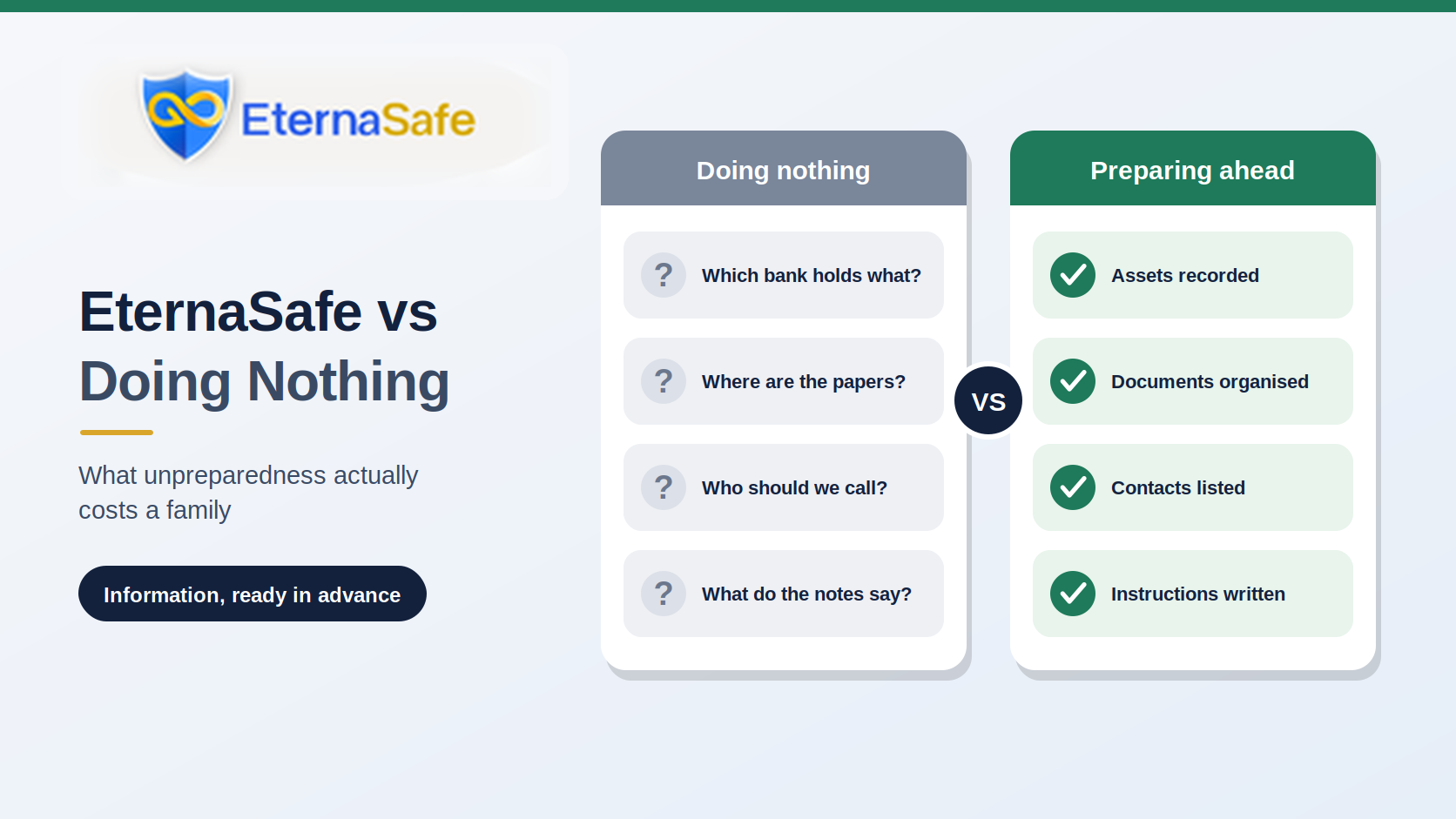
The main difference is not that one approach guarantees a perfect outcome and the other guarantees a financial loss. It is that one involves preparing information in advance, while the other leaves important questions unanswered until someone needs those answers.
| Area | Doing nothing | Preparing with EternaSafe |
| Financial assets | Family may have to search for accounts and investments | Structured asset records can help identify what exists and where to begin |
| Important documents | Records may be scattered across files, emails and devices | Relevant documents can be organised in the platform’s document and legacy sections |
| Trusted contacts | Family may not know whom to contact | Helpful contact details can be recorded for future reference |
| Family instructions | Important information may depend on memory or informal conversations | Legacy notes can document information and instructions for authorised future access |
| Business continuity | Responsibilities may be unclear if the owner becomes unavailable | Business and income continuity information can be documented in advance |
| Access planning | Family may not know how information is intended to be shared | Nominees and the platform’s verification process can be configured according to its available arrangements |
EternaSafe describes features including a structured asset guide, document uploads, legacy notes, helpful contacts, business continuity information and verified nominee access. These tools are intended to help users organise information while they are able to explain it themselves.
However, a digital platform does not guarantee that every financial asset will be recovered or that every legal issue will be resolved automatically. Families must still follow the requirements of banks, insurers, investment providers and relevant authorities.
What Is a Digital Legacy Platform, and Why Does It Matter in India?
A digital legacy platform is a place to organise information that may matter to your family in the future, including financial records, important documents, personal instructions and details about where assets are held.
For Indian families, this can be particularly useful because financial information may be spread across several banks, insurers, investment platforms, property records and physical files. Different institutions have different procedures, and knowing where to start can be just as important as having the documents themselves.
Searching for a digital legacy platform India families can use should therefore involve more than checking whether a service offers online storage. It is worth considering whether it helps you organise information meaningfully, manage access for trusted people and understand what happens if you become unavailable.
EternaSafe is designed around this information-management problem. Instead of treating every document as an isolated file, it provides sections for recording assets, writing legacy notes, organising helpful contacts and documenting business continuity information.
The idea is straightforward: while you are available to explain your financial life, you can create a record that helps your family understand it later.
What EternaSafe Can Help You Prepare
1. A Clear Record of Your Financial Assets
You may remember that you have a bank account, an insurance policy and a few investments, but your family may not know which institutions hold them or how to begin a claim.
EternaSafe’s Assets Guide allows users to record information across categories such as banking, insurance, investments, property and lockers. This can help create a more structured picture of the assets a family member may need to locate.
The record is a starting point, not a substitute for official account statements, ownership documents or the claim procedures required by each institution.
2. Important Documents and Legacy Notes
Some information does not fit neatly into an account number or financial statement. It may include instructions about where original property papers are kept, details about an ongoing responsibility or a personal message you want your family to receive.
EternaSafe’s Legacy Notes section supports document uploads and personal notes, along with other information described on its website. This gives users a place to organise relevant records rather than relying entirely on scattered files and conversations.
Before storing sensitive information, understand the platform’s security model and recovery arrangements. EternaSafe describes an encrypted, zero-knowledge architecture, which also means users need to take care of their private Unlock Password and Recovery Key according to its instructions.
3. Trusted Nominees and Future Access
Organising information is useful only if the intended people can access it when the need arises. At the same time, giving someone unrestricted access to sensitive records while you are alive may not be what you want.
EternaSafe describes a nominee system in which designated people do not receive immediate access simply by being added. Its stated process includes alerts, identity verification and oversight before access is granted.
Users should read the current terms and access procedures carefully, keep their recovery information safe and make sure nominees understand their role. The platform’s access process does not replace legal authority that may be required to deal with specific assets or accounts.
4. Business and Income Continuity Information
For business owners and self-employed professionals, family preparation may also involve documenting responsibilities that keep income flowing.
EternaSafe describes a Business and Income Continuity Guide for recording information such as operating procedures, vendor contacts, cash-flow notes and key staff details. Having this information organised may help a trusted person understand which responsibilities need attention if the business owner becomes unavailable.
It does not guarantee that a business will continue operating or that another person will have legal authority to manage it. Those matters may require separate business, financial and legal arrangements.
Is EternaSafe Better Than Doing Nothing?
Doing nothing may feel easier because there is no immediate task to complete. You do not have to find old statements, review your records or decide which information your family should know.
But that convenience comes with a trade-off: if something unexpected happens, the people who depend on you may have to work out your financial arrangements without your help.
Preparing with EternaSafe offers a way to begin organising relevant information in one place. It can be useful for families that want a structured record of assets, documents, contacts and instructions, particularly when one person currently manages most of the household’s finances.
Still, EternaSafe should be part of a broader plan rather than the only step you take. A digital legacy platform does not replace a valid will, appropriate insurance, updated nominations, an emergency fund or professional legal and financial advice.
The practical choice is not between buying a platform and solving every problem. It is between taking reasonable steps to prepare and leaving everything for your family to discover later.
How to Start Preparing Your Family’s Information
You do not need to organise your entire financial life in one sitting. Start with the information that would be hardest for your family to find without you.
- List Your Financial Assets: Record the banks, insurers, investment providers and other institutions where you hold assets.
- Locate Important Documents: Identify where your insurance policies, property papers, will and other essential records are stored.
- Write Down Key Contacts: Include the relevant financial institutions and the professionals your family may need to contact.
- Document Important Responsibilities: If you manage household finances or a business, record recurring payments and the tasks someone may need to handle.
- Review Access And Legal Arrangements: Make sure your nominations, will and other documents reflect your circumstances, and seek professional advice where needed.
- Choose A Suitable Way To Organise The Information: This could involve a carefully maintained record or a digital legacy platform such as EternaSafe. Review security, access and recovery features before deciding what to store.
Once you have created the initial record, revisit it periodically. New accounts, investments, property purchases and changes in family circumstances can all make older information incomplete.
Conclusion
The cost of being unprepared is not always visible while everything is going well. It becomes clearer when a family needs to locate an account, claim an insurance benefit, manage a business responsibility or understand what a loved one wanted to happen.
EternaSafe offers a way to organise important family information before that moment arrives. By creating a record of financial assets, documents, contacts and instructions, you can help reduce the amount of guesswork your family may face later.
A digital legacy platform India families choose should be evaluated on how well it supports their needs, how information is protected and how authorised access works. It should also fit into a wider plan that includes legal documents, financial preparation and clear communication with trusted people.
You cannot plan for every situation, and no platform can promise that your family will never face difficulties. But you can make it easier for them to understand what you have prepared, where important information is kept and which steps they may need to take.
Doing nothing leaves those questions unanswered. Preparing now gives your family a clearer place to begin.
Frequently Asked Questions
What is a digital legacy platform in India?
A digital legacy platform helps people organise important information, financial records, documents and instructions that trusted family members may need in the future.
How does EternaSafe help families?
EternaSafe provides sections for recording assets, organising documents and legacy notes, maintaining helpful contacts and documenting business continuity information, with a designated nominee access process.
Can EternaSafe replace a will?
No, a digital legacy platform can help organise information, but it does not replace a properly prepared will or other legal documents required for your circumstances.
What happens if I do not organise my financial information?
Your family may struggle to identify assets, locate documents, contact financial institutions and understand ongoing responsibilities, potentially causing delays and additional stress.
Is a digital legacy platform only useful for wealthy families?
No, families with ordinary savings, insurance policies, loans and household responsibilities can also benefit from keeping important financial information organised and accessible to the appropriate people.
When should I start planning my digital legacy?
Start while you can explain your financial arrangements and personal wishes clearly. You can begin with a basic asset list and add documents and instructions as your circumstances change.